Welcome to Biotechr


Biotechr is written by Dr. Robert Kruse (@RobertLKruse), who holds a PhD and is currently completing his MD. His research work focused on infectious disease and immunology. This blog is focused on analyzing the latest developments in biotechnologies being developed in academia and industry, with a particular focus on biomedical therapeutics. I hope that the posts are interesting and useful, and hope you join in the discussion with guest posts on the site!

Disclaimer: The thoughts on this blog are not intended as any investment advice regarding any companies that might be discussed, and represent my opinion and not the opinions of my employer. This site is not designed to and does not provide medical advice, professional diagnosis, opinion, treatment or services to you or to any other individual.

Monday, August 31, 2015

HBV X protein Antagonism as a Novel Therapy

by Robert Kruse

There is one missing mechanism from the armament of anti-HBV therapies I have seen (see this recent review for comprehensive list of therapeutic strategies being developed). It is one targeting the most mysterious HBV protein of them all, the X protein. The X protein was named because its function was unknown at first, but after years of research, it has been elucidated that it is crucial in modulating the expression of HBV genes, and could have other functions in depressing inflammatory signaling. I cited a schematic of the various features and functions of the different domains of the X protein below, for those interested in studying the biology of the protein further, in particular the promoter transactivation functions.
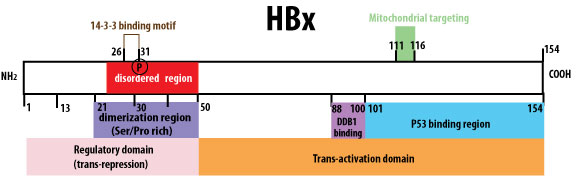
Image from http://education.expasy.org/images/HBX_regions.jpg

The role of the X protein as transcriptional transactivator is potentially very promising as a therapeutic target. It has been found that the X protein is absolutely crucial for HBV infection. A mutant HBV without the X protein completely fails to infect humanized mice, and a similar mutant woodchuck hepatitis virus fails to infect woodchucks. What is interesting is that later HBV X protein expression appears to be able to rescue these genomes and have productive HBV expression subsequently.

The objective of many HBV researchers right now is to remove covalently closed circular DNA, or cccDNA, the genome of Hepatitis B virus. An alternative to this same goal would be to epigenetically inactivate the cccDNA genome, thereby stoping productive virus production and essentially having dead genomes inside the mouse. HBV X protein appears to be necessary to keep an open and active chromatin state on cccDNA. Without it, the genome becomes silent explaining the "dead genomes" phenomenon. Patients with acute HBV infection and recovery can often still harbor cccDNA that is detectable by PCR for years after.

It is suggested here that investigators should pursue a small molecule screen that antagonizes X protein function. Such a molecule would be specific to HBV proteins, and turn off viral infection almost like a switch. The production of all viral proteins would be suppressed simultaneously, including the key serum biomarker HBV surface antigen, or HBsAg.

In order to design the small molecule screen, a few considerations need to be undertaken. HBV X helps to transactivate many different promoters, including the HIV LTR. Luciferase or GFP expressed by the LTR promoter could be assayed for expression levels influenced by X protein as a convenient readout for high throughput screens. A negative screen of cells without the X protein would need to be taken out as well to rule out compounds with non-specific function.

Lead candidates from this screen would need to be tested against the "real thing" and HBV itself. A common cell line previously used for this is the HepG2.2.15 cell line, which harbors an integrated HBV genome. However, it's not clear that the HBV X protein's function is the same for an integrated chromosomal HBV versus HBV in its natural state as a circular episome. The same question is true for many studies on the function of X protein using an HBV linear over-length genome contained on a bacterial plasmid.

In order to test the lead compounds against something closer to the "real thing," a model that has cccDNA must be used. A cell line HepG2-hNTCP, which expresses the HBV receptor human NTCP, has been recently described allowing HepG2 cells to become infected with HBV. The efficiency of infection in vitro remains very low however. For a high-throughput screen, it might be more advisable to have a more efficient process producing cccDNA inside cells. There are two potential ways of doing this. One would be to transfect cccDNA itself, which might be generated by a PCR and ligation process. The other would be to transfect purified HBV capsids, which pseudo-infect HepG2 efficiently. Whatever the method, one would want to test controls of genome without X protein and cells alone, in order to measure any possible side effects of the drug in liver cells.

The alternative strategy compared to a small molecule screen would be a rationale design of a small molecule using the known crystal structure of the DDB1 and HBV X binding surface. HBx binds to DDB1 with an alpha helical loop. If a small molecule could be designed that fits into this binding pocket, then an efficient anti-HBV molecule might be obtained with the efficacy of potential complete knockdown. Furthermore, many viruses co-opt DDB1 for their life cycles using this same interface, meaning that any discovered small molecule compound could leveraged against multiple indications, which should make companies and investors happy.

While I outlined novel small molecule means of targeting the X protein, in theory, some of the siRNA's being developed target the X protein transcript (see Arrowhead and Alnylam), and might have some mechanism in decreasing X protein levels. This might explain some of the differences in knockdown abilities among the different transcripts, since it has been shown that most siRNA's target transcripts around the core region are not very efficient at knockdown. Targeting surface antigen transcripts with siRNA's is also often less efficient than one's targeting all HBV transcripts. That said, the efficacy of siRNA's against the X mRNA might be limited since these other HBV mRNA's greatly outnumber the X transcript, and therefore sop up most of the siRNA efficacy against the X mRNA transcript.

In conclusion, directly targeting the HBV X protein is a tantalizing option for a new therapeutic strategy that is not currently being pursued by drug companies today, but may fit well with cocktail HBV therapy approaches, such as the one Arbutus (formerly Tekmira) is pursuing.


Friday, July 31, 2015

NantKwest IPO and Roadshow Review

by Robert Kruse

NantKwest's IPO was this week, and it is time for investors to take a closer look at the newest immunotherapy player on the market. The distinguishing feature for NantKwest is its focus on natural killer cells as cell therapy effectors, and more specifically, its focus on natural killer cell lines as a cell therapy effector. Their roadshow presentation has been posted on youtube: here.

NantKwest owns the NK-92 cell line, which is a natural killer cell line derived from a patient with leukemia. It is continuously growing like other tumor cell lines, and is dependent on IL-2 in the media for continued expansion. The NK-92 cell line appears to be frozen in time in a permanently activated state, with upregulated effector functions making it well suited for therapy. In order to transfer these cells into the clinic, they first need to be irradiated, which causes mutations in their DNA arresting further cell division. This procedure might sound complicated, but is fairly routine both in the laboratory (ex: irradiated MEF feeder cells) and in the clinic for a variety of applications.

Image from NantKwest's website
The advantage of using a cell line is the ability to have a true allogeneic product, unlike the autologous strategies of Juno and Kite. Differing from Cellectis and its allogeneic strategy is the ability to have a standardized product that will be the same for all patients. This is what Dr. Soon-Shiong refers to when he says a Master Cell Bank, which is another common FDA process for codifying what cells are used in the manufacturing for patients. By comparison, Cellectis after engineering the T cells, will still have variability in the product since different cell products can come from different donors. Of course, they could add a level of quality control testing to make sure their lots are comparable across different parameters, but this adds additional cost. These complexities are greatly reduced by NantKwest's strategy.

Since the NK-92 cells will be transient in the patient, repeated infusions are required. Furthermore, these repeated infusions may elicit an immune response to the NK-92 themselves. In the 2013 reported clinical trial, they reported 1 of 7 patients developed anti-HLA antibodies at 4 weeks post-infusion, and this patient might have actually developed those antibodies from unrelated transfusion during the treatment period. One thing noted in the academic papers is that the patients are already greatly immunosuppressed, with many having gone on various chemotherapy and bone marrow transplants before trying this therapy. They likely don't even have an efficient immune system in order to produce these antibodies. Ultimately, this is a question that requires close monitoring for the future, since the number of infusions required over a given span for treatment efficacy will be vital for NantKwest's success or failure.

Dr. Soon-Shiong outlined three different treatment paradigms in the roadshow video for investors. The first is the unalterated NK-92 cell line, which they refer to as aNK's. The second is a common derivative cell line expressing the high affinity CD16 receptor (haNK's). Note that NK-92 cells resemble the CD56 bright phenotype of NK cells and are CD16 receptor negative, contrasting with CD56 dim NK cells that are positive for CD16. This cell line is used in research to study the process of ADCC (antibody dependent cell-mediated cytotoxicity), both in the lab and in clinical testing for therapeutic monoclonal antibodies. This last fact is something Dr. Soon-Shiong emphasizes, since NantKwest intends to push the paradigm of co-administering NK-92 cells with therapeutic monoclonal antibodies (discussed more below).
Image from NantKwest Website

The third platform discussed is likely the most promising, which are CAR-directed NK-92 cells, which they call taNKs. The chimeric antigen receptors resemble the same one's Juno, Kite, and Novartis are pursuing as platform for T cells. The signaling would be the same, but with perhaps slightly different killing and cytokine release mechanisms due to differences between NK and T cell biology. For instance, a review by Dr. Hans Klingemann, discoverer of the NK-92 cell line, states that NK cells would not cause cytokine release syndrome, unlike T cell therapies, due to low IL-6 secretion upon CAR activation.

I will now discuss various specific elements of NantKwest's presentation and their strategies moving forward:

  • The haNK platform is somewhat similar to Unum Therapeutics, wherein high affinity CD16 can bind any given anti-tumor antibody. Unum's platform engineers a high affinity CD16 ectodomain onto T cell signaling (CD28, Zeta, etc) endodomains for activation. Both Unum and now NantKwest highlight lots of partnering opportunities with current monoclonal antibody companies for their respective platforms. Presumably, Unum would argue that their T cells would be long-lived, allowing for continuous re-arming, while NantKwest is limited to a "hit-and-run" strategy of increasing the efficacy of the initial peak of monoclonal antibody concentration.
  • The patients highlighted in the presentation with 15 and 18 infusions of aNK's over several months previously had a really harsh chemotherapy regimens, and seemingly don't have any immune system to react to the allogeneic cells. The patients that have tolerated multiple infusions therefore might not be truly representative of most cancer patients. 
  • The treated Hodgkin's lymphoma patient with complete remission (CR) patient for 8 years was speculated to achieve this status due to a stimulated host immune response, since the aNK therapy is only transient in nature. Dr. Soon-Shiong speculated that the aNK's triggered a host immune response via inducing the immune response against EBV infected the patients' tumor. This potential vaccination effect is very intriguing, since it would allow a transient NK therapy to turn into a long-term host T cell immune response. One time case reports are just that, though, as many therapies have rare astounding successes, so investors should taper enthusiasm until more data is in.
Screen Capture from NantKwest Roadshow Presentation
  • Dr. Soon-Shiong showed some unpublished data in a mouse model that further investigates this hypothesis. The slide was brief, but appeared to be a syngeneic CD19+ lymphoma model with tumor inject into the right flank of the mouse. haNK's against CD19 were infused, and then this treatment was able to induce host mouse T cells to react and clear tumor compared to controls. This was one of the most potentially interesting phenomena I saw in the presentation, but again, this needs to be both rigorously evaluated in academic labs and in the clinic. 
  • The Merkel cell carinoma target is interesting for their aNK technology. Dr. Soon-Shiong talked about the NK versus Merkel cell polyomavirus, but MCC's typically only express Large T antigen and are closer in phenotype to tumor cells. Regardless, it's an orphan indication that will help validate their model and get potentially an early FDA clearance. I'm curious about the efficiency of homing for aNK's to the tumor site, and how this effects the dose and number of infusions needed. Possible combinations with Abraxane were also mentioned, consistent with Dr. Soon-Shiong's pioneering of that therapy. 
  • A note on the clinical trials reported by NantKwest. Before Dr. Soon-Shiong got involved, the company was a small biotech and NK-92 testing was largely done in only a handful of academic centers among investigators there. Most academic researchers have been focused on T cells, so there haven't been many other reported trials for aNK's. With these largely academic trials, the scale was small and the tumors treated varied, since it was thought that aNK's could be active against multiple tumor types (which they are in vitro). There was no level of antigen specificity and targeting a specific cancer like there has been in the CAR T cell and CD19 / ALL story. Therefore, the Phase I data is very sporadic, lacks direction, and mostly reads like clinical case reports, rather than a vigorous clinical trial. With this disclaimer, only 2 responses out of 40+ patients in previous trials is not very inspiring, with the highlighted single Hodgkin's Lymphoma patient being from 8 years ago. One would hope more progress would have been made. With the large cash infusion from the IPO and scaling for Phase II trials, we will hopefully get a better sense of any therapeutic efficacy. On this note, the reported target dose for Phase II aNK trial is 3 x 10^9 cells, and anticipated number of infusions is 15 or greater. 
  • What the benefit of a large infusion of hanNK's with timing of current monoclonal antibody (ex: Hereceptin) infusions is uncertain, even though Dr. Soon-Shiong pushed this concept significantly. The connection between the CD16 affinity and MAb response in cancer patients is impressive, but the analogy to infusing haNK's isn't equivalent. NantKwest showed some mouse studies briefly that are unpublished with anti-CD123 that showed some evidence that it should work in vivo, but much more data is needed for clear evaluation. Concerning haNK's further, there is a lot of existing competition of mutations in the Fc domains that increase binding to CD16 receptors, to get around this low affinity problem. NantKwest might argue that their strategy using existing drugs that are already scaled compared to any new players, but this alternative strategy should be noted. 
  • NantKwest appears to be pushing the concept of a PDL1 CAR, which I don't think is being pursued by any of the T cell companies. I feel like the PDL1 taNK would be highly susceptible to being off-target, even if PDL1 is overexpressed on tumors. Immune cells express PDL1, and most anti-PDL1 antibodies are engineered to lack ADCC activity for safety reasons. The taNK's would be a powerful effector against PDL1, much more so than ADCC inducing monoclonal antibodes. The alternative view is that since the NK cells only around 2-3 days, toxicity might not matter since it will be transient and most cells will in theory go to the highly PDL1 positive tumor. I suspect that NantKwest is pushing this target to try to have the most broadly applicable antigen target for tumors as possible, allowing any approval to be quickly applied to other tumor types. It's a high risk, high reward strategy that differentiates them from some of the other CAR players. 
  • Dr. Soon-Shiong highlighted NantKwest's capabilities in neoantigen discovery (coming from technology of his other companies). I am not as sure how the sequencing fits into their platform. For whatever target they discover, they will still need to build a CAR or a TCR-like CAR into their NK cell platforms. Unless the targets from the deep sequencing of neoepitopes is applicable for multiple patients and not for discovering personalized mutations, I don't see how this integrates into their off the shelf strategy. Many academic, not to mention, industry players are continuously screening for new CAR targets, and the easiest route is likely translating these known targets to the clinic.  
  • Given the successes and notoriety of CAR-T therapies, the taNK appears to be NantKwest's most interesting approach, however a number of major questions remain. Will NK-92 CARs prove to be as good effector cells as T cells? Will the repeated infusions of NK cells make up for their lack of persistence relative to T cells? The targets NantKwest is pursuing for their taNKs include some that would potentially have severe off-tumor toxicities, such as HER2 and PDL1. One of the defining aspects of 2nd generation CAR-T therapies is their incredible potency against even very low levels of target antigen. This makes them very potent, but also quite dangerous if the target antigen is expressed even at low levels on essential off-tumor tissue. If taNKs are as potent as CAR-T cells, I would worry about the toxicities, even if taNK persistence is self-limiting. Otherwise, this might suggest NantKwest feels their taNKs are likely to be less potent either in magnitude of response or sensitivity to low levels of target antigen compared to CAR-T cells, and thus taNKs may be a less potent (but less toxic) adoptive cell therapy approach.

    In all, while NantKwest's approaches are theoretically interesting, they'll need a lot more clinical validation to justify their record biotech IPO.


    Thursday, July 16, 2015

    Benitec Pivoting into HBV - Good move?

    By Robert Kruse

    Benitec is a biotech company focused around the delivery of shRNA vectors by adeno-associated viruses (AAVs). For the lay, host polymerases transcribe the DNA creating an RNA hairpin, that is then cleaved and processed into an siRNA molecule that can then proceed to silence targeted mRNAs. Benitec calls this strategy ddRNAi, or DNA-directed RNAi, to distinguish it from other competitors like Alnylam who focus on delivering siRNA alone. The central benefit is the ability to have siRNA stably expressed in transduced cells over time, whereas siRNA approaches must be intermittently delivered. The risk with transduction, depending on the vector, is that it will eventually be silenced, and that in the case of AAV, might even be silenced quickly by a host capsid immune response.

    Benitec's big bet was on using shRNA-AAV therapies to cure Hepatitis C virus. The delivery of shRNA could knock down genomic HCV RNAs curing the virus across the liver. They progressed to phase II trials with good effectiveness. The problem, of course, is that Gilead or others succeeded in a cocktail regimen that could cure HCV in 3 months with small molecules posing limited risk to patients and straightforward manufacturing processes. This compares to the AAV strategy, which may only require one dose, but scaling up the number of doses to meet the current sizable demand might have taken significant time, not to mention cost. Benitec's best bet in this space would have been if all the HCV drugs failed in their clinical trials, allowing shRNA to emerge as the sole therapeutic option that could be curative. Still, for a potentially transient disease like HCV where RNA turnover is frequent, the competitors at Alnylam and others would have have been able to scale their programs faster to treat the same patients.

    With Benitec searching for the next option, they now seem to have pivoted toward a Hepatitis B virus program. They bought the additional HBV IP from the Chinese company, Biomics Biotechnologies, and are likely marrying it with their own IP governing AAV vectors and shRNA cassettes.

    On the surface, it makes perfect sense. They have insight into the development of therapies against viral infections of the liver with proven delivery strategies. However, unlike the HCV play, where the shRNA directly degrades HCV genomes to remove the virus, the mechanism of action for shRNA against HBV will be indirect, and therefore open up the same risks that the other HBV knockdown companies are dealing with.

    Risks:

    1. Transduction efficiency -  efficiency seems to be higher for infected cells with AAV, but significant coverage of the liver would still need to be reached in humans in order to hit most infected cells.

    2. Mutational escape -  the mutation rate of virus may allow them to rapidly escape inhibition by the shRNA overtime. If combined with other therapeutics, such as nucs, this might delay or limit this possibility.

    3. How much HBsAg knockdown?  - what amount needs to activate the immune system. A lower set point for HBsAg and HBV DNA might not necessarily lead to clearance.

    4. Anti-vector immune response - in a round about way, any AAV immune response would likely help inhibit HBV through bystander effects on HBV infected cells, this would likely be transient in nature though.

    5. Persistence of shRNA expression - the benefit of AAV driven shRNA will be the lack of dosing over time, but the question will be how long of a knockdown will be needed? 6 months? 12 months? Will the shRNA expression last for 12 months? Furthermore, the same immune response that could occur against HBV genomes might also wipe out the AAV genomes making the shRNA, neutralizing the therapy.

    6. Safety - as with all gene therapies, the FDA does a risk benefit analysis. Whereas the siRNA therapies are more like drugs that could be stopped at any time, the AAV treatment is permanent. For HBV patients who are otherwise healthy, this risk might be too much, and the FDA could never approve this strategy. That said, the ongoing safety results of AAV in other clinical trials suggests it should be safe going forward.

    On the upside, the utility in administering the knockdown therapy one-time into the patient will solve patient compliance problems and make it much easier to use. This is particularly the case for the knockdown strategies involving weekly or bi-weekly IV administration, such as Replicor. In my analysis, I would say that Benitec really needs whatever immune reactivation paradigm for HBV after HBsAg knockdown to take around 8-12 months or even more, a range that might make their siRNA competitors less appealing.

    Testing in an appropriate animal model such as chimpanzees would be useful in order to gauge future success, since previous academic studies with AAV-shRNA against HBV could only validate knockdown alone. Here are two studies that are largely similar to what Benitec will be doing.

    Inhibition of HBV replication and gene expression in vitro and in vivo with a single AAV vector delivering two shRNA molecules. - BMB Reports 2009

    Expression of shRNA from a tissue-specific pol II promoter is an effective and safe RNAi therapeutic. - Molecular Therapy 2008


    Thursday, June 25, 2015

    Thoughts on Kite's Investor Day Presentations - TCR developments


    Kite Pharma had their Investor Day this week (you can watch here). I actually thought there were a number of interesting presentations and discussions that might be worth mentioning & I'll give my thoughts on them more below.

    I've skipped around in the beginning, which is mostly introduction and review of all the current data.

    Pipeline: Slide 9 & 10, description at 15:00 ***Slide numbers are based on those in the webcast

    They gave the following timeline for their pre-IND products:
    HPV E7 entering clinical trials later this year at NCI
    HPV E6 entering clinical trials 2016 as a Kite IND
    1st Amgen collaboration CAR product 2nd half 2016 IND

    I've previously written about Kite's neoantigen TCR program, and there were some interesting developments that were mentioned at the end of the investor day - see Steven Rosenberg section below.

    KRAS TCR
    Additionally,  I had not heard of their KRAS TCR product, which sounds very interesting. They stated the KRAS TCR program is entering clinical trials later this year at NCI, quite soon. People have tried to find ways to target "undruggable" but very commonly mutated genes in cancer like KRAS by trying to generate a T cell response (vaccines etc.) against the mutated portion of the protein, but with little success so far. If one could generate an effective response, it would be very exciting, as the mutations are clearly cancer driver mutations, present in a large percentage of tumors, and importantly also relatively homogeneous within the tumor, and would be difficult for the cancer to evolve around. So, while the idea is great if you had an effective KRAS mutant-specific TCR, the attempts so far have been underwhelming, so why would it be different here, and how did they develop this TCR?

    A clue may have come later in the presentation by Dr. Steven Rosenberg of NCI, presenting on identification of neoantigen-reactive TCRs, which I'll get back to later, put up this slide (slide 96, 1:39:20)


    While identifying neoantigen-reactive TCRs, they found one that was reactive against the common KRAS G12D mutation. G12D is extremely prevalent in a number of tumors:

    From fantastic Ras review by McCormick and colleagues, Open Archive Here

    So, it appears that by chance, they've discovered a TCR that is reactive against G12D, and like all TCRs, it is restricted against a specific HLA allele, HLA-A11, disclosed here (HT @SkepticalPhD). I am assuming that this naturally occurring TCR is the one that they are using in their upcoming clinical trial later this year, but that does not appear to have been disclosed yet. I expect since Dr. Rosenberg presented this currently unpublished data that we will be seeing a publication relatively soon on all of this. Also, if they continue to catalog what are the neoantigens and identify TCRs from TILs (tumor-infiltrating lymphocytes) that can react against them, they may be able to build up a bigger library of TCRs against shared driver mutations across a variety of HLA alleles. For me, this was the most exciting development coming out of Kite's presentation, and I'll be following the KRAS TCR story closely. There were a number of other interesting topics discussed and developments.

    Multiple CAR Inputs - Inhibitory CARs
    CARs are probably the most sensitive of antibody-targeted approaches for killing cancer cells. This has obvious advantages, but the disadvantage is that you need an exquisitely specific target that is not present at all (or certainly not at significant levels) on essential normal tissue. This severely limits the number of targets that make sense for CARs to be designed against. Recently a number of groups, including the Sadelain lab (Juno IP), have designed CARs that incorporate multiple inputs to improve their specificity. Essentially you are adding logic gates to the T cell so that it is designed to target cells that have:
    Target A AND Target B: http://www.ncbi.nlm.nih.gov/pubmed/23242161
    Target A NOT Target B: http://www.ncbi.nlm.nih.gov/pubmed/24337479
    Target A OR Target B: http://www.ncbi.nlm.nih.gov/pubmed/23839099

    While the first two examples were from the Sadelain lab, other groups are working on building similar systems, such as Martin Pule (IP I believe licensed to Autolus). Other labs seem to be working on additional approaches as well.

    On Slide 43 (53:55) Kite revealed plans for an inhibitory CAR (the NOT approach above) to improve on-target off-tumor specificity & potentially open up new targets. The presenter said they could not reveal the details yet as this is still ongoing work, but it will be interesting to see what targets they go after if these make it to the clinic at Kite, Juno, or other CAR players.


    Screening for TCRs
    Ton Schumacher, now CSO at Kite EU, presented on technology he has developed to screen, similar to how antibodies can be screened, for TCR binding to a given target (starting at slide 48, 1:00:00).


    In addition to screen for TCRs with optimal properties, it is possible that this approach could help overcome one of the drawbacks of TCR-based therapies, which is that they have to be specific to a patient's HLA allele, and any given TCR will not be able to be given to every patient. This screening technology was specifically mentioned as a way to generate TCRs against different HLA-alleles for HPV antigens to be able to cover about 90% of patients (at 2:17:00). Schumacher's group has also developed ways of screening patient TCRs for tumor reactivity, a potential approach for developing patient-specific neoantigen TCRs.

    Steven Rosenberg
    Rosenberg presented starting at slide 56, 1:20:40, and even though he was summarizing previous results, I thought the whole thing was worth a listen.

    I'll just quickly mention some interesting slides he presented on upcoming CAR & TCR programs first.

    Slide 79, 1:31:50 
    He mentioned a Thyroglobulin CAR for thyroid cancers entering clinical trials at NCI. I thought this was interesting as it's a tissue-specific target, that might be the most similar to CD19 in terms of a target present on a non-essential tissue that you it is acceptable to ablate (the thyroid here, vs. B cells with CD19). I would be interested in other targets present on non-essential tissues as CAR targets, perhaps others will still need added specificity of multiple CAR inputs, as previously mentioned above.

    Slide 82, 1:34:00
    When discussing targeting Cancer/Testes (CT) antigens, he mentioned that while in certain tumor types NY-ESO-1 is re-expressed frequently, across all epithelial tumors, only 1.8% express NY-ESO-1 on >50% of their cells. NY-ESO-1 directed TCRs have already shown efficacy in synovial sarcoma and melanoma.
     
    MAGE A3 on the other hand is present in 17.8% of epithelial tumors on >50% of cells. They are now concentrating making better TCRs here against MAGE A3, as numerous, and fatal cross-reactivity had occurred with previous TCRs against this target, describe here, here and here.
    If they can develop a safe & effective TCR against MAGE-A3 it could b

    Slide 95, 1:38:30 & Slide 96
    Now getting to patient-specific neoantigen TCRs, Rosenberg pointed out the potential benefit of inserting TCRs into T cells as opposed to using TILs directly, specifically that you can put the TCR into the right T cell, not an exhausted, or more differentiated T cell that might be more prevalent in TIL therapies. TILs have already had some remarkable activity, specifically in melanoma, and additionally Rosenberg has recently published a case report in Science, where they purified a specific T cell clone reactive against a patient-specific neoantigen and expanded those to make a new T cell product given to the patient with impressive efficacy. While this first patient, presumably patient 1 in the table below, was treated with purified TILs, Rosenberg's group has gone on to identify the neoantigens the TILs can react against as well as identify the TCRs that are reacting against them.

    I am not sure if the patients listed above were just analyzed to see if they could identify TCRs against patient-specific mutations, or if they were treated with either a specific TIL clone reactive against the antigen or with a neoantigen-specific TCR. It will certainly be interesting to see what comes next with these approaches that presumably will be coming relatively soon in publications or presentations.

    Manufacturing of an autologous T cell product reactive against a patient-specific mutation seems like a daunting task, but, perhaps it's not quite as daunting as I previously thought. In the Q&A at 2:01:30 - Rosenberg stated that it only takes 48 hours to sequence the exome from a tumor, and then only an additional 48 hours to identify which peptides potentially bind the patient's MHC. So maybe with approaches Rosenberg has described in reviews here, or those previously mentioned above developed by Ton Schumacher, the development of patient-specific neoantigen-reactive TCRs will be within the realm of feasibility.

    T Cell Product Composition
    Another interesting point that is not mentioned very often, but probably influences the quality & persistence of all T cell products, whether CAR or TCR, is the differentiation status of the T cells in the cell product before administration. I don't think it's completely understood what's the ideal mix of the different levels of differentiated T cells. This topic was discussed on slides 41 & 42, starting at 49:35, for those interested:


    Researchers at the NCI have published a methods paper for generating high central-memory phenotype T cell products here, which might be what they already use: http://www.ncbi.nlm.nih.gov/pubmed/20551831

    Kite is looking at using a small molecule to be able to expand T cells while maintaining a more immature differentiation state for future T cell products (slide 42)
    Here are some papers from NCI on modulating the differentiation state of T cells:

    Other Q&A Notes (1:41:30)
    2:02:50 - Allogeneic CAR-T cells
    In general there are a number of barriers to effective allogeneic CAR-T therapy.
    Immune suppress patients (normally not continued indefinitely)
    Rejected even with major MHC matched or removed, because of minor MHC
    GvH dangerous —> Rosenberg doesn’t see allo happening now
    Universal NK cells —> 10^11 NK cells that can recognize cancer cell lines in vitro & no effect in patients (Rosenberg), maybe some evidence in hematologic cancers, but in solids not aware, but maybe NK approaches can be used to improve ADCC.

    2:11:45 - Persistence of T cells
    Long term T cell persistence might not be necessary, but it might be just correlated with good T cells that can recognize tumor.
    Appears only a few weeks needed to get CR (After 1 month after treatment in Kite study, even if persistence waned after that the CRs could still be maintained - presented at AACR15).
    This might have implications for thinking about how long allogeneic T cells might need to persist for sufficient activity before they are rejected by the patient's immune system.

    2:14:10 - HPV E6 Antigen - why so excited?
    TIL data good
    Already have responses in HPV E6 TCR program, but this is not the place to disclose the full dataset. Goals now to increase response rates, need to make HLA-specific —> Schumacher tech allows identification of HPV TCRs against multiple HLA types —> so can cover 90% of the population.

    Bluebird collaboration for next-gen: http://ir.kitepharma.com/releasedetail.cfm?ReleaseID=918816
    Sounds like PD-1 knockout, or something similar.

    2:19:05 - Target multiple mutations simultaneously?
    Ongoing CRs from TILs —> TILs recognizing 1 or more, but normally number is pretty small, just a few 1, 2, 3 & still the can avoid escape.
    Would like to target multiple or target a driver mutation

    Mesothelin CAR-T —> probably not a good target because on a normal tissue (although they are still doing dose escalation trial too).

    Conclusions
    I feel like Kite/NCI has been building a really exciting TCR platform, but TCRs seem to be getting overshadowed by the hype (somewhat deserved) around CARs. I think Kite is going after the targets that seem to make the most sense, with the highest tumor-specificity -
    Cancer/Testes antigens --> such as NY-ESO-1 & MAGE A3
    Viral antigens --> such as HPV E6 & E7
    Neoantigens --> which in general are patient-specific, but through this approach, they've already found a TCR targeting the ubiquitous KRAS G12D mutation.

    So I will be very interested in following the ongoing developments in the TCR space, particularly against neoantigens & KRAS G12D, and I expect, based on Rosenberg's presentation, that we will be seeing additional publications or presentations in the not too distant future.


    Disclosure: I own shares of KITE

    Saturday, June 13, 2015

    Thoughts on Bluebird's EHA LentiGlobin Presentation & Sickle Cell Disease


    Bluebird bio presented updated data on Saturday at the European Hematology Association conference on their first sickle cell patient treated with their LentiGlobin gene therapy product with follow up out to 6 months post-transplant. I wrote about my expectations for the 6 month data in a previous post here. I also wrote short posts before and after the abstract was released containing the 4.5 month data, where I touched upon the differences between treating Sickle Cell & B-thalassemia with LentiGlobin, as well as the characteristics of the drug product the first patient with SCD received, such as CD34+ cell dose and average vector copy number (VCN).

    The major point in my most recent post was that the large amount of normal HbA hemoglobin the patient received from a donor blood transfusion might obscure the actual relative amounts of T87Q the patient-derived red blood cells contained. The patient was being weaned off blood transfusions, with the last transfusion coming on Day +88, presumably just before the 3 month data was collected. The majority of the patient's blood, and thus hemoglobin, came from the transfused blood at 3 months, and as the transfused blood cells died off, the patient's own blood cells became a larger and larger fraction of their total blood. So while the %T87Q hemoglobin increased dramatically from 9.6% to 24% from 3 to 4.5 months as a percentage of total hemoglobin, it only increased from 39.5% to 42% of patient-derived hemoglobin (this only considered T87Q and HbS hemoglobin & excluded HbF since it was not reported at 3 months). The figure below attempts to illustrate what I mean about the relative amounts of patient-derived and donor red blood cells and hemoglobin at 3 vs 4.5 months:


    Here are updated charts from the previous post, now including the 6 month data:

    The % changes as a fraction of total hemoglobin - patient & donor-derived
    (assumes all non HbS or T87Q is HbA from transfused blood):

    This is how the data is usually reported, the T87Q% is growing rapidly relative to total hemoglobin, but this is mainly due to the decrease in transfused hemoglobin as those cells are being replaced by patient hemoglobin from 3 months on.


    Relative amounts of T87Q and HbS coming from patient's blood at 3, 4.5 & 6 months:

    If we look at just the relative contributions of sickle hemoglobin (HbS) and T87Q, we can see that as a proportion of the patient's own hemoglobin, the percentage that is coming from T87Q is actually growing more slowly from 3 to 6 months. This excludes fetal hemoglobin, generally present at relatively low levels, and which wasn't reported at 3 months.


    Adding back in HbF levels (only have data at 4.5 & 6 months):

    The more complete picture, with HbF added back in at 4.5 and 6 months, shows that while the amount of patient hemoglobin coming from T87Q increased nicely from 37% to 43% at 6 months, that these gains came mainly at the expense of fetal hemoglobin, with the HbS percentage remaining at 51%. I wouldn't necessarily read too much into the HbF levels showing a relative decrease. HbF is normally elevated in sickle cell patients, and perhaps if blood function is normalizing it could go down (although 5% is still elevated), but this is pure speculation. It is also possible that T87Q will continue to slowly rise, but it seems like the majority of the increase from 9.6% to 24% to 40% was driven by loss of the transfused cells more than a relative increase in T87Q versus HbS. So, speculatively, I could see it starting to plateau here around the 50% range.

    So what can we conclude about the state of the patient's blood based on these numbers? Bluebird has reported promising phenotypic data, and will perhaps report more details, on the patient having markers of improving blood function, such as reduced hemolysis markers, a stoppage in pain medication, and no hospitalizations. All of this in line with reduced sickling, although I agree with others that the data is still early here.

    There are a few ways to think about what amounts of T87Q will be efficacious, and for a deeper read on all of the following topics, I would suggest taking a look at the PropThink article I co-wrote with Zack (@BioTerp), it discusses more thoroughly these topics and has a lot of useful references. To briefly summarize, the major arguments come from mixed chimerism post-allogeneic transplant in SCD patients and the levels of fetal hemoglobin in Hereditary Persistence of Fetal Hemoglobin (HPFH).

    I thought I'd make some minimalist images to illustrate what the red blood cells look like in all the different scenarios, and how the different types of hemoglobin are possibly distributed. Patients with SCD have two copies of sickle-mutant hemoglobin beta (HbS), whereas patients who have sickle cell trait, who only have one mutant copy of HbS, make ~60% normal HbA and ~40% HbS. Since all the cells are genetically identical, presumably the HbA is evenly distributed throughout the red blood cells. These levels and distribution of HbS are generally asymptomatic.


    Sickle cell patients can also get blood transfusions, like the patient in the trial was receiving, and generally the goal is to keep HbS levels under 30% to reduce symptoms, particularly the life-threatening ones. In this case, you are just diluting the number of cells that can potentially sickle, but the patient's cells still contain mostly sickle-prone HbS hemoglobin. In HPFH, patients can have around 30% of their total hemoglobin come from fetal hemoglobin, which can block the ability of HbS to polymerize and cause sickling. These patients generally have a very mild disease or are even asymptomatic, which is why bluebird mentions 30% as a target threshold for T87Q levels. Since the cells in HPFH are genetically identical, most likely the fetal hemoglobin is roughly evenly distributed, and the vast majority of the cells have similar amounts of protection.
    The reason that I don't think you can make the direct comparison to LentiGlobin-treated red blood cells is because the distribution of T87Q hemoglobin is most likely more heterogeneous than fetal hemoglobin in HPFH, so the cells might not all have similar levels of protection. For the initial cell product, while the average VCN was around 1, that does not mean that every stem cell had 1 copy of the vector integrated. A recent paper using a similar lentiviral approach found that for an average VCN around 0.92, only 30% of progenitor cells were actually modified with between 1 and 9 copies of the vector (the majority 1-2 copies). So in this case there will be genetic heterogeneity in the amount of T87Q vectors integrated, so most likely the expression will be more heterogeneous in red blood cells, and could affect what percentage of cells are protected from sickling.

    For instance, the 40% T87Q could be evenly distributed, with all the cells having 40% of their hemoglobin coming from T87Q. Alternatively, T87Q could be concentrated in a few cells, with a significant fraction of cells being unmodified and still able to sickle. Both of those are unlikely, the first due to the heterogeneity of vector integration and the second due to the survival advantage of red blood cells that don't sickle. Most likely there will be some intermediate level of heterogeneity, but that makes me more cautious in assuming that 30% total T87Q will be exactly like 30% fetal hemoglobin in HPFH patients.

    We know that there is a survival advantage of normal red blood cells versus SCD red blood cells from mixed chimerism in humans after receiving allogeneic transplants. This is the situation where a patient receives an allogeneic transplant, but not all of their stem cells are replaced, and a percentage of their stem cells come from the donor, but a percentage of their original stem cells remain. It was found that even when <30% of the patient's bone marrow was from the healthy donor, that the vast majority, frequently >90%, of their red blood cells were donor derived. These patients are generally asymptomatic, even with only small amounts of normal stem cells. This suggests there is a selective advantage for non-sickling red blood cells, which should hold true for LentiGlobin-modified RBCs with sufficient T87Q:

    Corrected Red Blood Cells Should Have a Selective Advantage:
    At least in this paper, which documented a handful of patients with mixed chimerism, the relative advantage of normal RBCs seemed to play out quickly with HbS dropping within 3-6 months, before reaching an equilibrium:

    The other thing that mixed chimerism teaches us, is that you don't need to correct all the stem cells to get functional benefit approaching that seen with complete repopulation of the bone marrow by donor stem cells after transplant. The LentiGlobin-treated CD34+ cells should be above 30% corrected cells, given that their average VCN was around 1.1, and as previously mentioned, with average 0.92 VCN, there were 30% vector-modified progenitor cells by another group (although single experiment, & in vitro). However, not all LentiGlobin-modified CD34+ cells may produce red blood cells that make sufficient T87Q to completely prevent sickling in those cells. Further, the VCN appears to actually have increased over time in the patient, as at 4.5 months, the average VCN was at 2.4 in peripheral nucleated blood cells. These are not red blood cells, and should not have any selective advantage for having the vector, so this most likely reflects the current VCN in the patient's stem cells. This is also the second highest VCN seen for any patients treated with LentiGlobin, only patient 1202 had higher (with now >4 VCN). So the effective quantity of T87Q produced and number of vector-modified stem cells might be higher than would have been predicted based on the drug product given to the patient.
    The higher, and increasing, VCN could be due to random variation, or a slight selective advantage of vector-modified stem cells. It is good to see that even patient 1202, who has had increasing VCN in peripheral blood, now over 4 VCN, does not show any sign of a clonal dominance.

    I don't know if you could assume this increase in VCN will happen in all SCD patients treated by bluebird, it hasn't happened for all of the B-thal patients. So, it's possible this first SCD patient will have a better than average response to LentiGlobin in terms of the amounts of T87Q produced, but we'll have to see how this plays out with more treated patients.

    In all, I think the data are a promising step forward for LentiGlobin in SCD.


    Disclosure: I own share of bluebird

    Friday, June 12, 2015

    Predictions for %T87Q for Bluebird at 6 Month EHA Presentation


    Bluebird bio will be presenting what is expected to be 6 months of follow up on their first sickle cell disease (SCD) patient this weekend at the European Hematology Association (EHA) conference. There is a lot of investor interest in the first data for SCD coming out using their LentiGlobin gene therapy approach. So here are some thoughts about what I might expect the data to look like at 6 months.

    To catch up, here are my previous posts on bluebird's LentiGlobin in SCD before the EHA abstract release, and analysis after the abstract release.

    My interpretation of bluebird's abstract including 4.5 months of follow up has changed slightly after further considering a comment by @Sharma1981N after my previous writeup. The comment was: Do you think much of the increase in %T87Q from one point to the next could be attributed to decreasing % of transfused RBCs?

    I initially responded thinking in terms of the g/dl of T87Q, and that likely it had indeed gone up considerably from month 3 to month 4.5. I wasn't, however, thinking about the relative amount of T87Q coming from the patient's own blood and how that was tracking. This is probably what's actually important, because if the patient is no longer receiving transfusions, then their blood should be made up entirely of HbS, T87Q & some HbF. Here is a table from the abstract breaking down the relative amounts of T87Q, HbS, HbF, and importantly the last pRBC transfusion:


    The Day +88 transfusion was presumably right before the 3 month follow up. At the 3 month follow up only 9.6% of total Hb came from T87Q, but only 14.7% came from HbS, with presumably the majority of remainder (HbA) from the transfused blood (>70%). At 4.5 month follow up, not having any transfusions since, the % T87Q and % HbS both rose, to 24% T87Q & 33% HbS (with 7.6% HbF).

    When looking at it this way, the amount of T87Q hemoglobin as a proportion of the hemoglobin made by the patient only increased slightly more than HbS did. So, on the downside, this suggests the relative levels of T87Q aren't actually climbing as fast as it seemed like based on the 9.6% to 24% jump. Since we don't have HbF levels for the 3 month visit, if you take that out of the equation and assume the entirety of the blood came from HbS and T87Q, then T87Q only went up from 39.5% of patient hemoglobin at 3 months to 42% of patient hemoglobin at 4.5 months. So, on the downside, T87Q as a proportion of patient hemoglobin might not be increasing that quickly, and may not increase that much more from 4.5 months on. On the plus side, this suggests that the patient is already making greater than 35% T87Q as a percentage of their total hemoglobin. If we include the 4.5 month fetal hemoglobin HbF, then the combined T87Q+HbF% is already up to 49% (37% coming from T87Q & 12% coming from HbF), with just 51% HbS. This is considerably above the 30% T87Q+HbF threshold bluebird has touted as being potentially ameliorative of symptoms.

    Here are charts illustrating the above:

    The % changes as in the abstract (assumes all non HbS or T87Q is transfused blood):
     Relative amounts of T87Q and HbS coming from patient's blood at 3 & 4.5 months:
     Adding back in HbF levels (only have data at 4.5 months):
    So, in what range can we expect the %T87Q of total hemoglobin (patient + donor, as reported in abstract and bluebird) to be in at 6 months. Assuming no transfusions between 3 and 6 months, a major determinant will be how much HbA from transfused blood will still be around 3 months after the last transfusion. Based on the rate of decline of transfused HbA in B-thalassemia patients (below), if the patient hasn't received a blood transfusion since day +88, it is very likely that the vast majority of transfused HbA would be gone. If this is the case, the %T87Q+HbF would seem to likely be >40% and the %T87Q by itself may even be near or greater than 40%.


    Briefly, my thoughts on what %T87Q (+HbF) would be likely to achieve a functional cure - the short answer is I don't think we can know for sure yet. I've previously voiced my concerns over making that direct comparison to the 30% amount seen in Hereditary Persistence of Fetal Hemoglobin (HPFH) patients - my main argument focusing on the relatively even distribution of HbF across all red blood cells in those patients, versus most likely heterogeneous T87Q expression in LentiGlobin treated patients' red blood cells. However, even if somewhat heterogeneous, 30% would likely be clinically meaningful based on the amount of HbF increase typically seen with hydroxyurea treatment. I will probably include a slightly more detailed version of my thoughts on what I think about targets for %T87Q in a post after the data is presented.

    So, in summary, when looking at the reported %T87Q changes from 3 to 4.5 months as a proportion of total hemoglobin (either patient or donor), the percentage appears to be rising dramatically. However, if we just look at the relative amounts of T87Q to HbS, the relative T87Q amount is rising much more slowly. If we even assume that this relative amount does not increase much more, if the patient is completely weaned off blood transfusions, then they would already produce in the range of 40% T87Q as a percentage of their total hemoglobin, and maybe only 50% HbS. If the patient hasn't received a transfusion since Day +88, it could very well allow the reported %T87Q (from either patient or donor) to rise to near 40% by the 6 month readout expected to be presented this weekend. So what I will be looking for is not only the %T87Q as a proportion of total hemoglobin, but also how the relative amounts of T87Q and HbS have changed from 3 to 4.5 to 6 months. Maybe I'll be surprised and the relative amount will increase substantially from 4.5 to 6 months. There are surely a number of assumptions in the above analysis, but hopefully it gives a good ballpark sense of where things seem to be tracking. Any additional phenotypic data on the patient or red blood cell function will clearly be important too.

    Edit: Here is an image to demonstrate what I mean about the relative T87Q amount compared to all hemoglobin, versus the relative T87Q amount compared to patient-derived hemoglobin:


    Monday, June 8, 2015

    Thoughts on Alnylam's HBV Program

    by Robert Kruse

    Most of the discussion in HBV siRNA therapies has centered around Arrowhead and Tekmira, since their programs are further advanced and seem to be the primary focus of investors for each company. Lagging behind is Alnylam, which has its own siRNA assets and program against HBV. I wanted to quickly review its HBV targeting strategy with comparisons to Arrowhead and Tekmira, and see if there are any potential advantages.

    I listed below a brief summary of the three companies for anyone unfamiliar with their HBV portfolios.

    Arrowhead: Currently using IV delivery, composed of two different siRNA molecules against HBV; recently published a generation that can be delivered subcutaneous and target the liver via GalNac.

    Tekmira: Lipid nanoparticle based formulation, delivered IV. composed of three different siRNA molecules against HBV

    Alynylam: Has both lipid nanoparticle technology delivered IV and GalNac conjugation and subcutaneous delivery strategies, will use two different siRNA molecules; proposed combination with PDL1 siRNA


    What intrigues me about Alynylam is their intention to use siRNA against PD-L1 in order to remove the break on virus specific T cells in the liver. This is an added feature that Arrowhead and Tekmira lack in their programs (although Tekmira has begun a multi-pronged approach buying small molecule assets recently). It is well known that chronic viral infections induce exhaustion in CD8 T cell effectors, including in HBV. PD-L1 can be upregulated on hepatocytes in chronic infection, in addition to PD1 upregulation on T cells, leading to inhibition of virus T cell responses. Thus, the PD1 pathways has been proposed as a target to re-awaken the fight against infections, similar to how it is being targeted in cancer immunotherapy currently. A proof of principle for this siRNA PD-L1 therapy was already modeled against murine cytomegalovirus infection of the liver in mice. Furthermore, there has been a published report using the anti-PD1 antibodies as therapies for HBV and that it can enhance activity of T cells in mice. The HBV mouse model used for this purpose has limited direct applications for human anti-HBV immune modeling, however, and direct testing in chimpanzees or phase I trials in patients is needed to truly test the exhausted HBV specific T cell phenotype. The reports of leveraging the PD1 / PD-L1 pathway against viruses looks promising in summation though.

    The downside of PD-L1 siRNA could be unlocked any inflammatory effects of T cells against the liver. Currently, anti-PD1 antibodies have well studied toxicities, but the specific targeting here to the liver could uncover potential new toxicities. For example, there could be auto-reactive T cells, held in check by PD-L1 hepatocyte expression, that are then activated by the siRNA. It's worrisome in such a vital organ that a large hepatotoxicity side effect could occur. I would imagine the FDA will be monitoring this closely going forward in any clinical trials. On this point, anti-PD1 antibodies have been used in early trials for HBV+ liver cancer patients, and so perhaps there is already some safety data on inhibiting this pathway in patients with HBV. Additionally, Bristol Meyers-Squibb is planning to test anti-PD-L1 antibodies in HBV infected patients. It remains to be seen whether an siRNA against PD-L1 is similarly safe.

    Those concerns aside, the angle of combining HBV and immune targeting with siRNA is very enticing. If the REPLICor reports are to be believed, then a combined HBsAg knockdown and immune stimulation (IFN alpha in their trial) is required for sustained virology response and cure. Given that interferon is challenging for patients to take, an siRNA against PD-L1 could be a more specific and potent immune activator, with less systemic side effects. It seems more and more likely that siRNA against HBV will not be enough, and that other triggers might be needed in order to induce HBV cure. In this respect, Alnylam is ahead of the game having it built into its strategy already.